
A fresh coat of paint can transform a room, but the quality of the finished result depends on more than the colour homeowners choose. Beneath every beautifully painted wall is a surface that should be properly prepared, repaired, and finished.
Small cracks, dents, nail holes, uneven patches, and damaged corners may seem insignificant before painting begins. However, these imperfections can become more noticeable once fresh paint is applied, especially when natural or artificial light falls across the surface.
For homeowners in Lethbridge and surrounding Southern Alberta communities, professional drywall repair and interior painting can help restore worn walls, refresh living spaces, and improve the overall appearance of a property.
At Devine Hands, we understand that successful interior painting begins long before the first coat of paint. Through our drywall repair, wall preparation, painting, and home improvement services, we help homeowners achieve cleaner, smoother, and more professional-looking results.
Why Wall Preparation Is So Important
Painting is often considered one of the easiest ways to update a home. While changing wall colours can make a dramatic difference, applying paint over damaged surfaces rarely produces the best outcome.
Walls may contain imperfections caused by years of everyday use, furniture movement, previous installations, or earlier repair work.
Common problems include:
- Small drywall cracks
- Nail and screw holes
- Dents from furniture
- Damaged corners
- Uneven patches
- Peeling paint
- Loose drywall tape
- Scuffed or worn surfaces
Without proper preparation, these issues can remain visible after painting.
A professionally prepared wall creates a smoother foundation, helping the final finish look more consistent throughout the room.
1. Identify Existing Drywall Damage
Before repainting, homeowners should carefully inspect the walls.
Some imperfections are easy to recognize, while others become noticeable only under certain lighting conditions.
For example, a wall may look smooth during the day but reveal dents or uneven repairs when a lamp shines across it in the evening.
Inspecting the entire surface before beginning work helps identify areas requiring attention.
At Devine Hands, we believe that addressing visible damage before painting is an important step toward achieving a finished appearance that homeowners can appreciate for years.
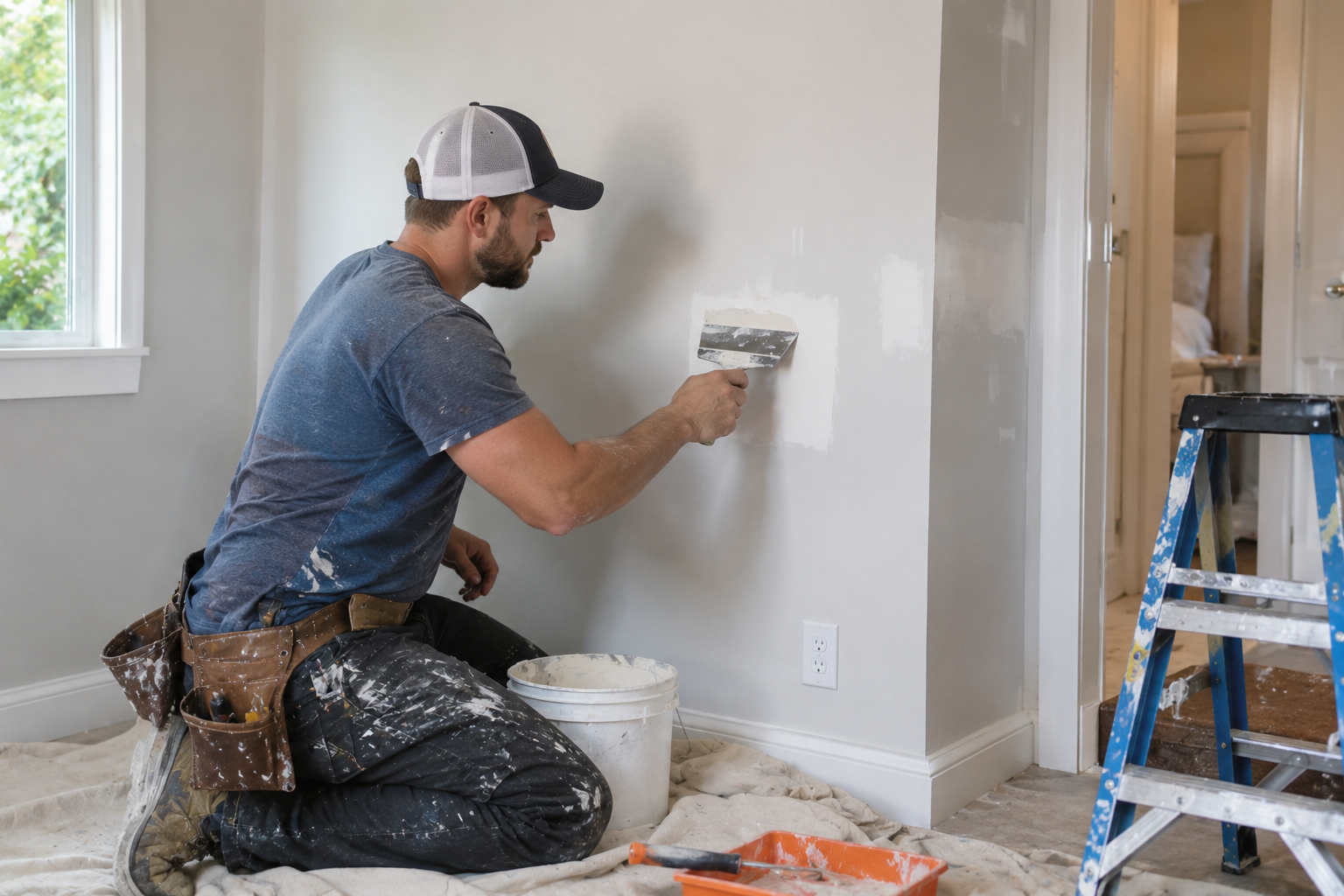
2. Repair Nail Holes and Small Dents
Nail holes and small dents are among the most common forms of drywall damage.
They often appear after homeowners remove:
- Picture frames
- Wall-mounted decorations
- Shelving
- Curtain brackets
- Television mounts
- Furniture anchors
Although these marks may be small, they can interrupt the appearance of an otherwise smooth wall.
Appropriate filling, sanding, and priming help restore the surface before painting.
The goal is to create a repair that blends naturally with the surrounding area rather than leaving a visible patch.
3. Understand Why Drywall Cracks Appear
Drywall cracks can develop for several reasons.
Normal building movement, changes in indoor humidity, and wear around joints or openings may contribute to minor cracking.
In Southern Alberta, seasonal temperature changes and dry indoor winter conditions can make certain existing imperfections more noticeable.
However, not every crack should be treated as a simple cosmetic issue.
Cracks that are unusually wide, repeatedly return, or appear alongside significant movement or other concerning conditions may require further evaluation.
A qualified professional should assess suspected structural problems before cosmetic repairs proceed.
Once the underlying concern has been addressed, appropriate drywall repair can restore the wall’s appearance.
4. Pay Attention to Damaged Corners
Corners are particularly vulnerable to everyday damage.
Moving furniture, vacuuming, children playing, and frequent household activity can cause chips, dents, and cracks around exposed edges.
Damaged corner bead or surrounding drywall may require more than a quick application of filler.
Proper repair helps restore a straight, clean edge that looks consistent with the surrounding wall.
This is particularly important in hallways, stairways, entryways, and other high-traffic areas.
5. Correct Previous Drywall Repairs
Not every drywall repair produces a smooth result.
Homeowners sometimes discover visible patches left by previous work.
These may include:
- Raised repair areas
- Uneven compound
- Sanding marks
- Poorly blended edges
- Different surface textures
- Visible patch outlines
Applying fresh paint will not necessarily hide these imperfections.
In some cases, paint can make them easier to see.
Correcting poorly finished areas before repainting can significantly improve the final appearance.
6. Sanding Makes a Difference
Sanding is an essential part of many drywall repairs.
After the appropriate repair compound has dried, sanding helps smooth the surface and blend the repaired area into the surrounding wall.
However, excessive sanding can create new problems.
It may damage the drywall paper, expose underlying materials, or leave noticeable low spots.
Professional preparation requires attention to the condition of the surface and the materials being used.
The objective is not simply to make a patch feel smooth to the touch. It is to achieve a consistent surface that will look natural after priming and painting.
7. Never Overlook Priming
Priming is another important step in achieving a consistent painted finish.
New drywall compound and previously painted surfaces can absorb paint differently.
Without appropriate priming, repaired areas may appear duller, shinier, or otherwise inconsistent with the surrounding wall.
This effect is sometimes called flashing.
Using a suitable primer helps create a more uniform surface before the finish coats are applied.
The type of primer required depends on the condition of the wall and the materials involved.
8. Choose Paint Based on Room Function
Colour is important, but homeowners should also consider how the room is used.
Different spaces experience different levels of wear.
For example:
Living rooms: A balanced finish that complements natural light and everyday use.
Hallways: A durable finish appropriate for frequent contact and cleaning.
Bedrooms: A finish that supports the desired atmosphere and maintenance needs.
Kitchens: Coatings suitable for the room’s cleaning and moisture conditions.
Bathrooms: Products appropriate for areas exposed to elevated humidity.
Selecting suitable paint helps homeowners achieve a finish that looks attractive and supports practical maintenance.
9. Refresh High-Traffic Areas First
Some rooms show signs of wear much faster than others.
Entryways, hallways, staircases, and family rooms often experience frequent contact with furniture, bags, shoes, pets, and everyday household activity.
Over time, these surfaces may develop:
- Scuff marks
- Scratches
- Small dents
- Chipped corners
- Worn paint
Repairing and repainting these areas can make a noticeable difference throughout the home.
Because high-traffic spaces connect multiple rooms, improving them can also create a more consistent appearance across the property.
10. Make Older Rooms Feel Brighter
Homeowners do not always need extensive renovations to improve an older interior.
Fresh paint combined with proper drywall preparation can make a room feel cleaner, brighter, and more welcoming.
Light neutral colours may help reflect available light, while deeper colours can create a more defined or comfortable atmosphere.
However, the best colour depends on the room’s lighting, size, furniture, and intended use.
A properly repaired wall provides a better foundation for whichever design direction homeowners choose.
11. Consider Ceiling Repairs
Ceilings are often overlooked during interior painting projects.
However, ceiling imperfections can affect the appearance of an entire room.
Common concerns include:
- Small cracks
- Previous repair marks
- Nail pops
- Uneven patches
- Paint damage
Ceiling repairs may require additional preparation because overhead surfaces can be difficult to work on.
Stains or recurring damage should also be investigated before repainting, particularly where moisture may be involved.
A clean, consistent ceiling finish can make the room feel more complete.
12. Coordinate Drywall Repairs With Other Improvements
Interior painting projects often provide an opportunity to address related household repairs.
For example, homeowners may also need:
- Baseboard repairs
- Door casing adjustments
- Trim painting
- Shelving removal or installation
- Minor wall repairs
- Door adjustments
Completing related work in a logical sequence can help prevent newly painted surfaces from being damaged by later repairs.
At Devine Hands, we encourage homeowners to consider the overall condition of a room before beginning the finishing stage.
13. Repair Walls After Removing Wall-Mounted Items
Removing an old television mount, shelving system, or decorative fixture can leave noticeable damage.
Depending on the installation, the wall may contain multiple anchor holes or larger openings.
These areas should be repaired appropriately before painting.
If homeowners plan to install replacement fixtures, the new mounting locations should also be considered.
Planning ahead can reduce unnecessary patching and repeated damage to freshly finished walls.
14. Improve the Appearance of Home Offices
Home offices have become important spaces for many households.
A room that was originally intended as a spare bedroom or storage area may now be used for work, video meetings, or studying.
Visible wall damage and worn finishes can make the space feel less professional.
Drywall repair and painting can provide a clean background without requiring a complete renovation.
Additional improvements, such as practical shelving and better organization, can further support the room’s function.
15. Give Basement Walls Proper Attention
Basements can benefit greatly from fresh drywall finishes and painting.
However, below-grade spaces require special consideration.
Before repairing or covering damaged areas, homeowners should check for signs of moisture.
These may include:
- Water staining
- Musty odours
- Damp surfaces
- Peeling finishes
- Repeated deterioration
Painting over an unresolved moisture problem is not an effective long-term solution.
The source of the problem should be identified and corrected before cosmetic work proceeds.
Once conditions are suitable, proper wall preparation and painting can help transform a basement into a more comfortable living area.
16. Understand the Value of Professional Workmanship
Drywall repair and painting require more than applying materials to a damaged surface.
Good results depend on:
- Accurate assessment
- Appropriate repair methods
- Proper drying time
- Careful sanding
- Suitable priming
- Consistent paint application
- Attention to finishing details
A repair that appears acceptable before painting may become highly visible afterward if preparation is rushed.
Professional workmanship helps create a more consistent result while reducing the likelihood of unnecessary rework.
Drywall Repair for Southern Alberta Homes
Homes in Lethbridge and nearby Southern Alberta communities experience seasonal changes that can influence interior conditions.
Temperature fluctuations, dry indoor air, and everyday household activity may contribute to wear on walls and finishes.
Regular maintenance helps homeowners identify minor damage before it becomes a larger concern.
Whether the property is relatively new or has been lived in for decades, well-maintained interior walls contribute to a cleaner and more comfortable living environment.
When Is It Time to Repaint?
There is no single repainting schedule that works for every home.
The appropriate timing depends on:
- Room usage
- Existing paint condition
- Surface damage
- Household activity
- Cleaning requirements
- Personal design preferences
Homeowners may choose to repaint when walls show visible wear, after completing repairs, or when changing how a room is used.
The most important consideration is ensuring that the surface is properly prepared before new paint is applied.
Let Devine Hands Handle the Preparation and Finishing
At Devine Hands, we help homeowners improve their interiors through professional drywall repair, wall preparation, painting, general maintenance, and home renovation services.
Whether the project involves repairing damaged walls in a hallway, refreshing a bedroom, improving a basement, or preparing several rooms for repainting, we focus on practical solutions and careful workmanship.
We are based in Lethbridge, Alberta, and homeowners in surrounding Southern Alberta communities are welcome to contact us to confirm service availability.
Give Your Walls the Professional Finish They Deserve
A beautiful paint colour deserves a properly prepared surface.
By addressing cracks, dents, holes, uneven patches, and other imperfections before painting, homeowners can achieve a cleaner, more consistent result.
Professional drywall repair and interior painting can refresh existing spaces without requiring a major renovation.
Ready to refresh your home’s interior?
Call Devine Hands: (587) 691-4769
Email: info@devinehands.ca
Contact Devine Hands today to discuss your drywall repair, wall preparation, interior painting, or home improvement needs. Let us help restore your walls and create a polished finish that makes your home feel renewed.