
Laundry rooms are among the hardest-working spaces in a home, yet they rarely receive the same attention as kitchens, bathrooms, or living rooms. For many homeowners, the laundry area is simply a place for washing clothes, storing cleaning supplies, and handling household chores.
Over time, however, an inefficient laundry room can become frustrating. Limited storage, poor lighting, damaged walls, awkward layouts, and cluttered countertops can make routine tasks more difficult than necessary.
The good news is that improving a laundry room does not always require a complete renovation.
With thoughtful planning, practical storage, durable finishes, and targeted repairs, homeowners can transform an overlooked utility area into a more organized and comfortable space.
At Devine Hands, we help homeowners improve everyday living through professional home renovations, drywall repairs, painting, general maintenance, and practical handyman services.
For homeowners in Lethbridge and surrounding Southern Alberta communities, a well-planned laundry room renovation can improve household organization while making better use of existing space.
Why Laundry Room Functionality Matters
Laundry is a recurring household responsibility.
Whether a family does several loads each week or manages laundry daily, the layout of the room can affect how efficiently the work gets done.
A poorly designed laundry space may have:
- Limited storage
- Insufficient work surfaces
- Poor lighting
- Awkward appliance placement
- Damaged walls
- Cluttered shelving
- Difficult access to supplies
These problems can make simple tasks unnecessarily time-consuming.
Improving the room’s functionality can help homeowners create a more efficient routine without making major changes elsewhere in the home.
1. Evaluate the Existing Layout
Before beginning a laundry room renovation, homeowners should examine how the current space functions.
Important questions include:
- Is there enough room to move comfortably?
- Can appliance doors open fully?
- Are cleaning supplies easy to reach?
- Is there sufficient space for sorting and folding?
- Are storage areas organized?
- Is the lighting adequate?
- Are maintenance connections accessible?
The answers can help identify which improvements will provide the greatest benefit.
A small laundry room may require a different approach from a large basement utility area.
The goal is to create a layout that supports the household’s actual needs.
2. Improve Storage Without Overcrowding the Room
Storage is one of the most common laundry room challenges.
Detergent, fabric care products, cleaning supplies, baskets, towels, and household items can quickly accumulate.
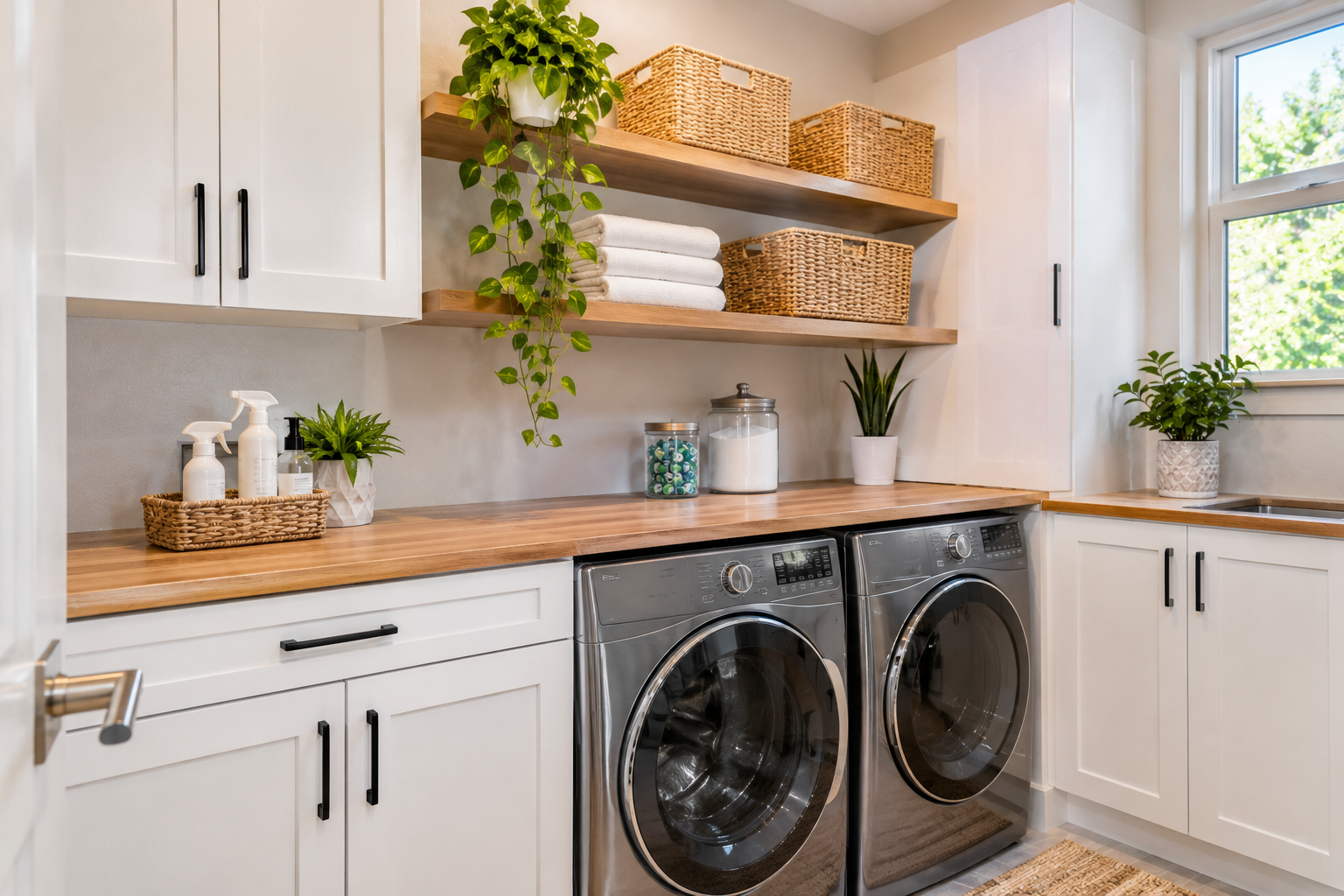
Wall-mounted shelving may provide additional storage without occupying valuable floor space.
Other options include:
- Upper cabinets
- Open shelves
- Storage baskets
- Utility organizers
- Dedicated supply areas
- Adjustable shelving
Storage should be planned around how frequently items are used.
Everyday supplies are generally easier to manage when they are accessible, while less frequently used items can be stored higher or farther away.
Cleaning chemicals should be stored securely and away from children and pets.
3. Make Better Use of Vertical Space
In smaller laundry rooms, wall space can be more valuable than floor space.
Vertical storage can help homeowners organize supplies while preserving room for appliances and movement.
For example, shelving above an appliance may provide space for laundry baskets or household products, provided the installation allows necessary clearance and ventilation.
Hooks and wall-mounted organizers may also help keep frequently used items off countertops.
Professional installation is important because shelves must be secured appropriately for the intended load and wall construction.
At Devine Hands, we understand that practical installations can make a significant difference in smaller spaces.
4. Create a Dedicated Folding Area
Folding clothes becomes easier when there is a clear, stable work surface.
Depending on the layout, homeowners may consider a countertop or other suitable work area.
A folding surface can help prevent clean laundry from accumulating on appliances, chairs, or nearby furniture.
However, the design must account for appliance access, ventilation, and manufacturer clearance requirements.
The best solution is one that supports daily tasks without restricting necessary maintenance access.
5. Repair Damaged Drywall
Laundry rooms can experience significant wear.
Moving baskets, cleaning equipment, and household supplies may cause dents or scratches.
In basement laundry areas, previous installations or repairs may also leave visible wall damage.
Common concerns include:
- Nail holes
- Drywall dents
- Damaged corners
- Unfinished patches
- Cracks
- Scuffed surfaces
Repairing these imperfections before painting can give the room a cleaner appearance.
At Devine Hands, we emphasize proper wall preparation so repairs blend naturally with the surrounding surfaces.
6. Choose Paint That Suits the Space
A fresh coat of paint can make a laundry room feel brighter and more welcoming.
However, appearance should not be the only consideration.
Laundry rooms may experience occasional moisture and humidity, making appropriate surface preparation and paint selection important.
Homeowners should choose products suitable for the room’s conditions and follow manufacturer recommendations.
Lighter colours can help reflect available light, particularly in basement laundry rooms with limited windows.
A well-prepared paint finish can also make routine cleaning easier.
7. Improve Lighting for Everyday Tasks
Poor lighting can make sorting laundry, checking clothing labels, and cleaning surfaces more difficult.
A functional laundry room should provide sufficient illumination around:
- Appliances
- Folding areas
- Storage shelves
- Utility connections
- Main walkways
Homeowners may benefit from a combination of general lighting and task lighting.
Where electrical changes are needed, the work should be completed by appropriately qualified professionals in accordance with applicable requirements.
Good lighting can make even a modest utility space feel more comfortable and practical.
8. Choose Durable Flooring
Laundry room flooring should be suitable for regular cleaning and the possibility of occasional moisture exposure.
Homeowners should consider:
- Water resistance
- Durability
- Ease of cleaning
- Slip resistance
- Compatibility with the subfloor
- Installation requirements
Existing flooring should be inspected for damage before new materials are installed.
Where water damage or recurring moisture is present, the underlying problem should be addressed first.
A durable floor helps support everyday use and reduces unnecessary maintenance concerns.
9. Keep Plumbing and Appliance Connections Accessible
Laundry rooms contain essential household equipment.
Washing machines, dryers, supply connections, drains, and ventilation components must remain accessible for inspection and maintenance.
Renovation plans should not permanently conceal important service connections or block required clearances.
Homeowners should also consider how appliances will be moved or serviced in the future.
If plumbing or electrical modifications are required, appropriately qualified professionals should perform the regulated work.
A functional laundry room should look organized without making maintenance more difficult.
10. Improve Ventilation
Laundry areas may experience elevated humidity, particularly when appliances are operating.
Proper ventilation is important for maintaining suitable indoor conditions.
Dryers must be vented according to applicable requirements and manufacturer instructions.
Homeowners should avoid blocking ventilation openings or installing storage that interferes with equipment operation.
If persistent condensation, unusual moisture, or musty odours are present, the cause should be investigated before cosmetic renovations begin.
Good ventilation supports both comfort and the long-term condition of the room.
11. Make Basement Laundry Rooms More Welcoming
In many Southern Alberta homes, laundry equipment is located in the basement.
These spaces sometimes remain unfinished because homeowners prioritize other rooms.
However, a basement laundry area can become significantly more functional with relatively straightforward improvements.
Potential projects include:
- Drywall repair
- Interior painting
- Shelving installation
- Improved lighting
- Storage organization
- Trim finishing
- Door adjustments
A clean, organized laundry area can make routine household tasks more pleasant.
The goal does not need to be a luxury renovation. Practical improvements often provide the greatest everyday value.
12. Consider a Multipurpose Utility Room
Some homes have laundry areas that also function as storage rooms or utility spaces.
Combining several functions can work well when the layout is planned carefully.
For example, homeowners may want designated areas for:
- Laundry
- Household cleaning supplies
- Seasonal storage
- Pet-care supplies
- General organization
Clear zones can help prevent one activity from interfering with another.
However, mechanical equipment, electrical panels, and required service access must remain unobstructed.
A multipurpose utility room should be organized around safety and functionality first.
13. Improve Doors and Access
Laundry room doors should operate smoothly and allow convenient movement.
Homeowners may notice:
- Sticking doors
- Loose hinges
- Damaged trim
- Difficulty moving baskets through the doorway
- Poorly positioned storage near entrances
Simple repairs or adjustments can improve accessibility.
In smaller rooms, door operation should be considered when planning shelving or other installations.
A practical layout should allow people to move comfortably without repeatedly navigating around obstacles.
14. Make the Room Easier to Clean
Laundry rooms often collect lint, dust, and household clutter.
A thoughtful renovation can make cleaning more manageable.
Helpful features include:
- Smooth, washable finishes
- Accessible storage
- Clear floor areas
- Organized shelving
- Durable surfaces
- Adequate lighting
Homeowners should also maintain appliances according to manufacturer instructions, including appropriate dryer lint and vent maintenance.
A space that is easy to clean is generally easier to keep organized over time.
15. Plan Around Household Needs
Every household uses its laundry room differently.
A family with young children may require additional storage for frequent laundry loads.
A household with pets may need dedicated space for cleaning supplies.
Someone living alone may prefer a simple layout with minimal storage.
The best renovation is not necessarily the most elaborate.
It is the one that makes everyday routines easier.
At Devine Hands, we believe practical home improvements should reflect how homeowners actually use their spaces.
16. Prioritize Repairs Before Decorative Upgrades
It can be tempting to begin a laundry room renovation by choosing colours, cabinets, or decorative finishes.
However, existing problems should be addressed first.
Homeowners should prioritize:
- Moisture or water damage
- Appliance and connection concerns
- Damaged walls or flooring
- Ventilation requirements
- Functional layout improvements
- Storage and finishing details
This sequence helps prevent newly completed finishes from being damaged by repairs that should have happened earlier.
Laundry Room Improvements for Southern Alberta Homes
Homes in Lethbridge and surrounding Southern Alberta communities vary in age, layout, and available utility space.
Some properties have dedicated main-floor laundry rooms, while others use basement areas or compact closets.
Seasonal conditions may also affect how frequently households use laundry facilities for heavier clothing, bedding, and winter gear.
A functional laundry area can help manage these everyday demands.
Homeowners should focus on durable materials, practical storage, and a layout suited to the existing property.
Why Professional Workmanship Matters
Even a small laundry room renovation involves details that affect the finished result.
Shelving should be secure.
Drywall repairs should be smooth.
Paint should be appropriate for the space.
Doors should operate properly.
Storage should not interfere with equipment or maintenance access.
At Devine Hands, we focus on practical solutions and careful workmanship when helping homeowners improve existing rooms.
Let Devine Hands Help Improve Your Laundry Room
Devine Hands provides professional home renovation, drywall repair, interior painting, general maintenance, and handyman services.
Whether homeowners want to refresh an unfinished laundry area, repair damaged walls, install practical shelving, or complete several smaller improvements, we can help create a more functional space.
We are based in Lethbridge, Alberta, and homeowners in surrounding Southern Alberta communities can contact us to confirm service availability.
Turn an Overlooked Room Into a Practical Space
A laundry room does not have to be large or expensive to work well.
With thoughtful storage, durable finishes, proper lighting, and carefully completed repairs, even a modest utility area can become more organized and comfortable.
Small improvements can make everyday household responsibilities easier while helping homeowners make better use of the space they already have.
Ready to improve your laundry room?
Call Devine Hands: (587) 691-4769
Email: info@devinehands.ca
Contact Devine Hands today to discuss your laundry room renovation, drywall repair, painting, storage installation, or general handyman needs. Let us help you create a practical, well-finished space that supports your household’s everyday routine.