
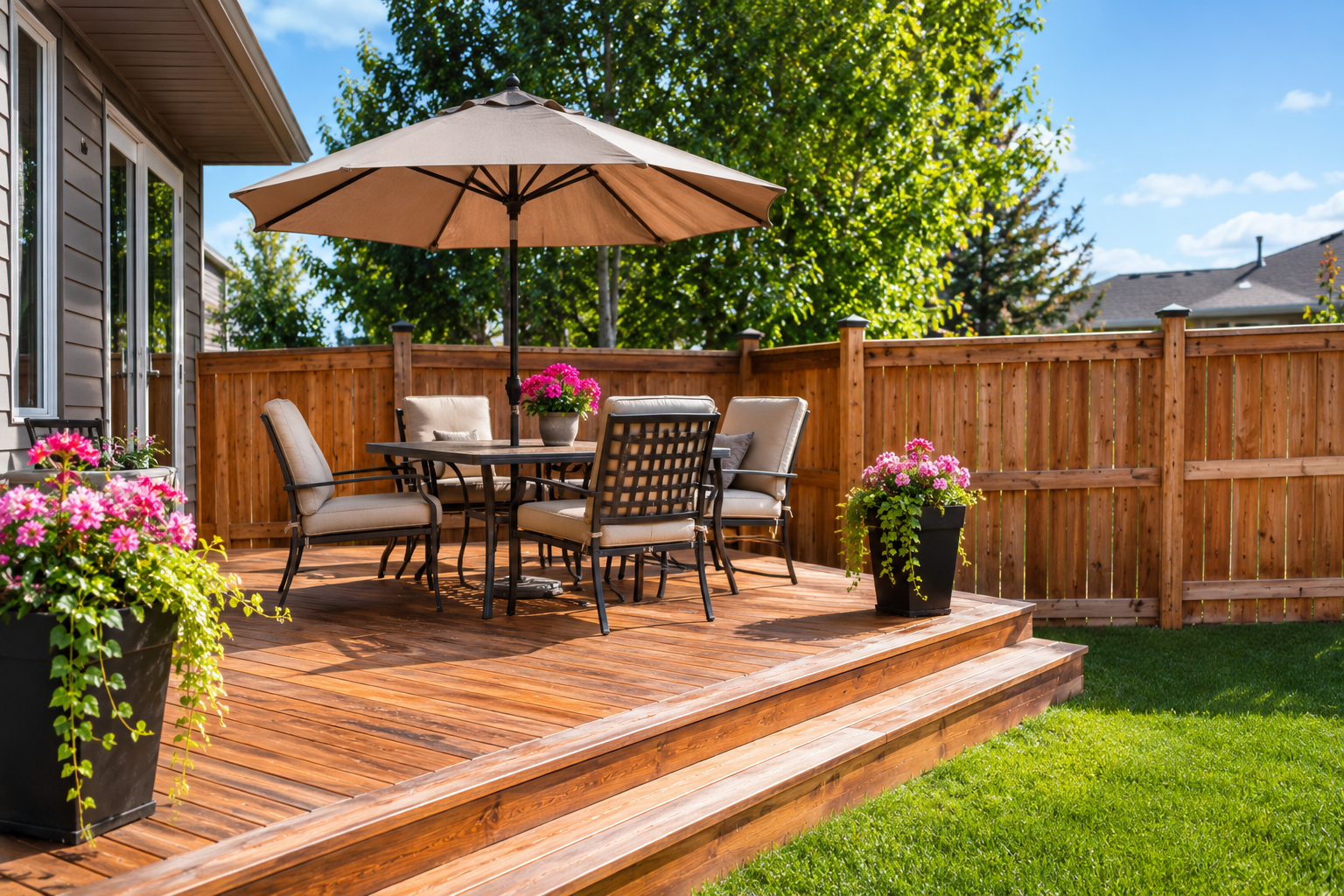
A well-built deck or fence can make a significant difference in how homeowners enjoy their property. A deck creates space for outdoor dining, relaxation, and family gatherings, while a fence provides privacy, defines property boundaries, and helps organize outdoor living areas.
However, Alberta’s changing weather conditions can place considerable stress on exterior structures. Snow, moisture, strong winds, freezing temperatures, and summer heat can all affect how decks and fences perform over time.
For homeowners in Lethbridge and surrounding Southern Alberta communities, choosing appropriate materials, planning the design carefully, and maintaining exterior structures are important steps toward long-term durability.
At Devine Hands, we understand that outdoor improvements should offer more than visual appeal. Through our deck and fence installation, repair, renovation, and general handyman services, we help homeowners create practical outdoor spaces designed around their property’s needs.
Whether homeowners are planning a new deck, replacing a deteriorated fence, or repairing an existing structure, understanding the essential considerations can help them make more informed decisions.
Why Deck and Fence Planning Matters
Outdoor projects often begin with a simple goal.
A homeowner may want more privacy, additional seating space, or a safer area for children and pets.
However, a successful installation involves more than selecting a design.
Important considerations include:
- Property layout
- Intended use
- Material selection
- Ground conditions
- Drainage
- Structural support
- Weather exposure
- Maintenance requirements
- Applicable permits and regulations
Planning these elements before construction helps homeowners avoid unnecessary modifications later.
1. Determine How the Outdoor Space Will Be Used
The first step is understanding the purpose of the project.
A deck designed primarily for quiet relaxation may have different requirements from one intended for large family gatherings.
Homeowners should consider whether they want space for:
- Outdoor dining
- Barbecuing
- Family gatherings
- Lounge furniture
- Container gardening
- Children’s activities
- Everyday relaxation
The intended use influences the deck’s dimensions, layout, access points, and structural design.
Similarly, a fence may be installed for privacy, security, pet containment, or defining outdoor areas.
Clearly identifying the project’s purpose helps ensure the finished structure supports everyday needs.
2. Choose Materials Suitable for Alberta Weather
Material selection is one of the most important decisions in an exterior project.
Decks and fences remain exposed to changing weather throughout the year.
In Southern Alberta, structures may experience intense sunlight, dry conditions, strong winds, rain, snow, and freeze-thaw cycles.
Common decking and fencing materials include pressure-treated lumber, cedar, and certain composite products.
Each has different characteristics.
Pressure-treated wood is commonly selected for outdoor projects because it is treated to resist decay and insects when used in suitable applications.
Cedar offers a natural appearance and contains compounds that contribute to its resistance to decay, although proper maintenance remains important.
Composite decking can reduce some routine maintenance requirements, but homeowners should evaluate product specifications, installation instructions, and suitability for local conditions.
No material is completely maintenance-free.
The best choice depends on budget, appearance, intended use, exposure, and long-term care expectations.
3. Understand the Importance of Proper Structural Support
A deck must be more than attractive.
It needs an appropriate structural design.
Footings, posts, beams, joists, connections, and other components work together to support the structure and its intended loads.
Poorly installed supports can contribute to movement, uneven surfaces, and structural concerns.
Homeowners should ensure that deck construction follows applicable building requirements and appropriate engineering guidance where necessary.
Existing decks should also be evaluated before major modifications.
A new surface finish cannot correct inadequate structural support underneath.
4. Consider Ground Conditions and Drainage
Outdoor structures are affected by the ground beneath and around them.
Poor drainage can allow moisture to collect near posts, foundations, or other structural components.
Over time, repeated moisture exposure may contribute to deterioration.
Before installation, homeowners should consider:
- Ground slope
- Water movement
- Soil conditions
- Drainage paths
- Nearby landscaping
- Existing structures
A properly planned deck or fence should account for the site’s conditions rather than simply follow the most convenient installation route.
5. Plan for Wind Exposure
Wind is an important consideration in Lethbridge and many surrounding Southern Alberta communities.
Solid privacy fences can experience substantial wind loads.
Fence height, post spacing, post embedment, materials, and installation methods all influence how the structure responds.
Homeowners should not assume that a taller or more solid fence is automatically the best solution.
The appropriate design depends on the property, local regulations, and structural requirements.
A properly designed fence should balance privacy, appearance, and durability.
6. Select the Right Fence Style
Different fence designs serve different purposes.
Common options include:
Privacy fencing: Provides visual separation between neighbouring properties.
Picket fencing: Creates a defined boundary while maintaining a more open appearance.
Horizontal fencing: Offers a contemporary design that may complement modern homes.
Decorative fencing: Helps define gardens, patios, and landscaped areas.
Before selecting a style, homeowners should consider how the fence will look from both sides and how it fits with the surrounding property.
The most attractive fence is not necessarily the most suitable one for every location.
7. Understand Local Permit and Property Requirements
Deck and fence projects may be subject to municipal regulations.
Depending on the project, requirements may address:
- Fence height
- Property boundaries
- Setbacks
- Deck height
- Structural design
- Permits
- Utility locations
- Safety features
Homeowners in Lethbridge should confirm current requirements with the City of Lethbridge before beginning work.
Those living in surrounding communities should check the rules applicable to their municipality.
Property boundaries should also be verified before installing fencing.
Where underground utilities may be present, appropriate utility-location procedures should be completed before digging.
8. Make Deck Access Safe and Convenient
Deck access should be considered during the planning stage.
Homeowners may need stairs, gates, or other connections between the house and outdoor areas.
Important considerations include:
- Stair dimensions
- Handrails
- Guards where required
- Stable walking surfaces
- Appropriate lighting
- Clear pathways
A deck that is difficult to access may receive less use than expected.
Practical access helps make the space more comfortable for household members and visitors.
9. Think About Privacy Without Closing Off the Yard
Privacy is often one of the main reasons homeowners install fencing.
However, a fence should work with the surrounding landscape.
Homeowners may want to preserve certain views, natural light, or connections between different outdoor areas.
A combination of appropriate fence placement, landscaping, and outdoor layout can sometimes provide privacy without making the yard feel unnecessarily enclosed.
Thoughtful planning can also improve how a deck and fence work together.
10. Protect Wood From Moisture
Wood is a popular material for outdoor construction, but it requires appropriate protection and maintenance.
Moisture can contribute to deterioration, particularly where water remains trapped or drainage is poor.
Homeowners should inspect wooden structures for:
- Soft or deteriorated sections
- Splitting
- Loose boards
- Damaged connections
- Areas that remain wet
- Peeling or failing finishes
Depending on the material and manufacturer’s recommendations, suitable cleaning, sealing, or staining may help maintain the surface.
The correct maintenance approach depends on the wood type and existing finish.
11. Inspect Fasteners and Connections
Deck and fence components rely on secure connections.
Over time, environmental exposure and regular use may affect fasteners, brackets, and other hardware.
Homeowners should look for:
- Loose screws
- Corroded hardware
- Moving boards
- Unstable posts
- Damaged brackets
- Separation at connections
Fasteners and connectors should be appropriate for exterior use and compatible with the materials involved.
For example, certain treated lumber products require specific corrosion-resistant hardware.
Damaged or unsuitable connections should be addressed before they compromise the structure.
12. Repair Damaged Deck Boards Promptly
Deck boards experience frequent exposure to weather and foot traffic.
Common issues include:
- Splitting
- Warping
- Loose boards
- Surface deterioration
- Damaged edges
A damaged board can affect both appearance and safe movement.
However, homeowners should avoid assuming that every problem is limited to the visible surface.
Where deterioration is extensive, the supporting structure should also be inspected.
Professional assessment can help determine whether targeted repairs are appropriate or whether more substantial work is needed.
13. Watch for Fence Post Movement
Fence posts provide the foundation for the entire fence.
When posts become unstable, sections may lean, shift, or move during windy conditions.
Possible warning signs include:
- Leaning sections
- Movement at ground level
- Loose panels
- Damaged connections
- Deteriorated post bases
Replacing a damaged panel without correcting an unstable post may not solve the underlying problem.
Proper repair should address the cause of movement rather than simply improving the fence’s appearance.
14. Plan Outdoor Storage Carefully
Decks and fenced areas often become gathering places for outdoor furniture, gardening equipment, and seasonal belongings.
Homeowners should consider how these items will be stored when not in use.
Practical storage can help reduce clutter and keep walking areas clear.
Storage arrangements should not obstruct drainage, ventilation, or required access to building components.
A well-organized outdoor area is easier to maintain and more enjoyable to use.
15. Prepare for Seasonal Maintenance
Decks and fences should be inspected regularly.
In Southern Alberta, seasonal maintenance may include:
- Removing debris
- Checking for loose boards
- Inspecting posts and railings
- Examining fasteners
- Cleaning surfaces
- Checking drainage
- Identifying deteriorated materials
Winter snow and ice can conceal damaged areas, making inspection during suitable weather especially useful.
Homeowners should avoid using removal methods or products that could damage their specific decking materials.
Regular maintenance helps identify issues before they become more complicated.
16. Know When Repairs Are Better Than Replacement
Not every aging deck or fence needs to be replaced.
Some structures may benefit from targeted repairs.
For example, replacing individual damaged boards, repairing sections of fencing, or correcting specific hardware issues may extend the useful life of an otherwise sound structure.
However, replacement may be more appropriate when deterioration affects major structural components or large portions of the installation.
The decision should be based on the actual condition of the structure rather than appearance alone.
At Devine Hands, we believe homeowners benefit from understanding their repair and improvement options before committing to a larger project.
Why Professional Installation Matters
Decks and fences are exposed to demanding conditions.
Proper installation requires attention to structural support, suitable materials, secure connections, and the specific conditions of the property.
Professional workmanship helps reduce the likelihood of avoidable problems caused by poor preparation or inappropriate installation.
A well-planned outdoor improvement should provide practical benefits while complementing the home.
Deck and Fence Improvements in Lethbridge
Lethbridge homeowners have several important factors to consider when planning outdoor projects.
Strong winds, seasonal temperature changes, and varying property layouts can influence the design and maintenance of exterior structures.
Homeowners in nearby Southern Alberta communities may face similar considerations, although individual site conditions and municipal requirements can differ.
Selecting appropriate materials and arranging professional installation or repairs can help create outdoor spaces suited to the property’s needs.
How Devine Hands Can Help
At Devine Hands, we provide deck and fence installation and repair services alongside our home renovation, general maintenance, and handyman work.
Our goal is to help homeowners create functional improvements that support how they use their properties.
Whether the project involves repairing damaged fence sections, improving an existing deck, or discussing a new outdoor structure, we focus on practical planning and careful workmanship.
We are based in Lethbridge, Alberta, and homeowners in surrounding Southern Alberta communities can contact us to confirm service availability.
Create an Outdoor Space Built for Everyday Living
A deck or fence is more than an exterior feature.
It can improve privacy, provide space for family activities, support outdoor relaxation, and make a property more functional.
The best results begin with careful planning, suitable materials, appropriate construction, and ongoing maintenance.
Planning a deck or fence project?
Call Devine Hands: (587) 691-4769
Email: info@devinehands.ca
Contact Devine Hands today to discuss your deck installation, fence repair, outdoor renovation, or general handyman needs. Let us help you create a practical outdoor space with professional workmanship and attention to detail.